
The global hotel industry is undergoing a shift as travellers move away from traditional luxury in favour of more intuitive, experience-led stays. In Thailand and across Asia, this transition is reshaping how hotels define themselves and connect with guests.
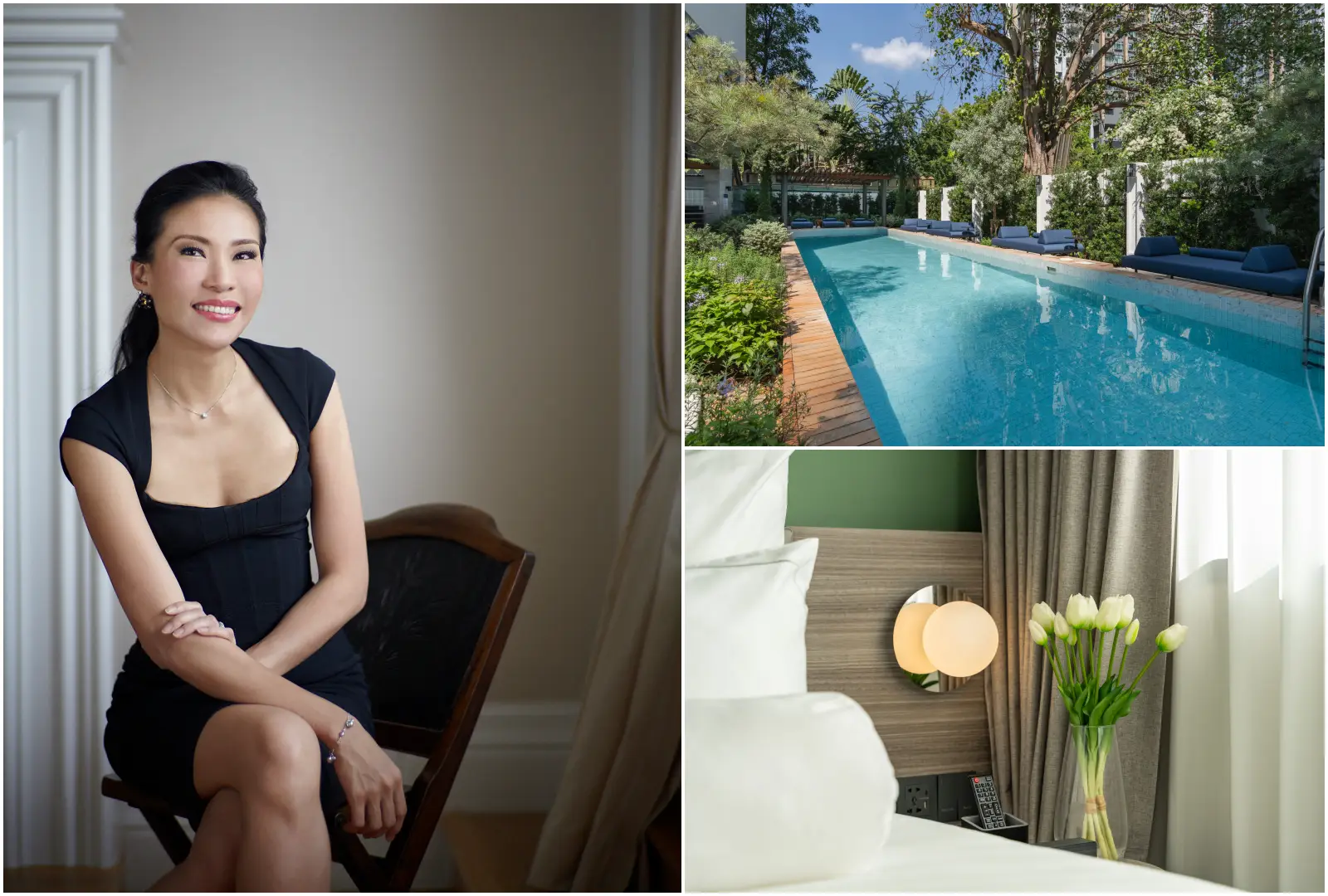
In an interview with Anchalika Kijkanakorn, Managing Director of AKARYN Hotel Group, the focus is on clarity of concept, urban hospitality trends, and the thinking behind Akyra Bangkok 11—an inner-city hotel designed to offer calm within one of Bangkok’s busiest neighbourhoods.
Could you please introduce your background in tourism and the hotel industry?
I have spent over two decades in the hospitality industry, developing and managing boutique hotels and resorts under the AKARYN Hotel Group. My focus has always been on creating distinctive hospitality experiences that are both commercially strong and emotionally resonant.
Over the years, I have had the privilege of working across resort and urban environments, from wellness-led destinations such as Aleenta to more dynamic city concepts like akyra. I also served as Chairman of the Board for Small Luxury Hotels of the World for several terms, which gave me a broader global perspective on independent luxury hospitality.
What continues to drive me is the ability to shape experiences that feel personal, relevant, and reflective of how people want to travel today.
What are your thoughts on the future of the hotel industry in Thailand, Asia, and globally? What are the key trends?
The industry is evolving quite significantly, and in many ways, becoming more honest.
We are seeing a clear shift away from traditional definitions of luxury toward something more intuitive and experience-driven. Guests are no longer looking for formality—they are looking for relevance, ease, and authenticity.
In Thailand and across Asia, this is particularly important. The region has always been strong in service, but the next phase is about clarity of concept and consistency of delivery. Hotels that understand exactly who they are—and who they are not—will perform best.
Key trends include:
- Blended travel(leisure, wellness, and light business combined)
- Shorter, more frequent stays
- Wellness integrated into everyday travel, rather than positioned as a separate product
- Technology that simplifies, not complicates, the guest journey
- Smaller, more focused properties outperforming large, generic ones
At a global level, the market is becoming more segmented. The middle is disappearing. You are either highly defined and relevant, or you struggle.
Could you tell us about Akyra Bangkok 11—why guests prefer your hotel, and your key markets?
Akyra Bangkok 11 is designed around a very clear idea: urban calm within one of Bangkok’s most energetic neighborhoods.
Sukhumvit Soi 11 is vibrant, social, and constantly moving. Our role is not to compete with that energy, but to offer a contrast—a place where guests can step back, reset, and feel at ease.
What makes the hotel stand out is its simplicity and clarity:
- Thoughtfully designed rooms that prioritize comfort and functionality
- A canal-side perspective, which is quite rare in central Bangkok
- A strong sense of ease—from arrival to departure
We also introduced service elements such as the Sleep Butler and Akyra Signature Glow, which respond directly to how people feel when they travel—jet lagged, overstimulated, or simply in need of recovery.
Our key markets are a mix of:
- Independent travelers from Europe and Asia
- Guests visiting nearby medical facilities such as Bumrungrad Hospital
- Short-stay urban travelers looking for location without sacrificing comfort
Importantly, we do not rely on a single segment. The hotel is designed to appeal to a broad but well-defined audience.
What’s new at the hotel in terms of services, rooms, and facilities?
What is “new” for us is less about adding more, and more about refining what matters.
We have focused on:
- Enhancing in-room wellness experiences through simple, effective rituals
- Strengthening our all-day dining concept, E/R/N (Gather · Share · Harvest), to better serve both guests and the local neighborhood
- Creating a more seamless arrival and stay experience, particularly for short-stay travelers
We are also paying close attention to how the hotel feels at different times of day—from morning calm to evening social energy—ensuring that each moment has its own identity.
Rather than overcomplicating the offer, we are deliberately keeping things intuitive and well-executed.
What percentage of bookings come via internet compared to traditional distribution channels?
Like most urban hotels today, the majority of our bookings are driven through digital channels.
Approximately 75–85% of our reservations come through online platforms, including OTAs and direct website bookings. The balance comes from corporate agreements, travel agents, and repeat guests.
That said, the more important focus for us is not the channel itself, but how we maintain rate integrity and build direct relationships with our guests over time.